

Journalist – Verica Jordanova
At the heart of the contemporary fashion scene, a story is emerging that sounds like a film script, yet is deeply rooted in our region. Simovska AI is not just another fashion brand – it is the place where a three-generation family heritage meets a vision for the future. Behind this concept are Bora and Boris Simovski, a married couple who come from families with deep roots in the textile industry. They decided to enrich traditional craftsmanship with the power of artificial intelligence, creating clothing for the woman who knows exactly what she wants.
Today, the brand has become so popular that its creations are worn in as many as 90 countries around the world, and its designs resonate with women across all continents. Their designs are finding their way around the globe — from the dynamism of New York, through the luxury markets of Saudi Arabia, all the way to the refined aesthetic of Japan.
In this interview, we speak with Bora Simovski about what it looks like when artificial intelligence becomes a creative partner, how the design and production process is changing, and what it means to build a global fashion brand from a region with a strong textile tradition.
To begin with, could you tell us a little more about Simovska AI and its founders?
Simovska AI was founded by a married couple who come from families deeply rooted in the textile industry. We grew up surrounded by the knowledge, discipline, and craftsmanship of fashion production, which gave us a strong connection to the traditional side of the business from the very beginning. What we did was bring innovation into that world — introducing artificial intelligence, new technologies, and a more advanced, visionary way of thinking into a family business with deep traditional foundations. In that sense, Simovska AI is the point where heritage and innovation meet, where generations of textile knowledge are reimagined through modern technology.
You are an AI-based fashion brand. Could you explain what that means? In which part of the process is AI involved, and how?
At Simovska AI, artificial intelligence helps us understand fashion in real time. It allows us to analyze global trends, recognize what audiences desire most, and respond much faster to changes in taste and demand. At the same time, it also supports our creative process, helping us develop and refine ideas more quickly, while making production more precise so that we create exactly as much as is needed — with less surplus and less waste.
For this brand, technology is not a replacement for the human being, but rather its best collaborator. Instead of simply guessing what will become fashionable, they use intelligent systems to analyze global trends in real time. The brand trains technology using extensive archives of original designs from our ancestors, patterns, and textures gathered across three generations of textile knowledge. Although AI generates thousands of visual possibilities, the essential role remains human – to decide what will actually be created and to guide the brand’s aesthetic. The future of fashion lies in the fusion of the two, but the soul will always come from the human ability to feel.

You say that AI is an integral part not only of the design process, but also of the production process. How?
For us, artificial intelligence is not only a design tool, but also a production tool. It helps us understand in real time how the market is responding, which makes production more precise, more thoughtful, and less wasteful. Instead of relying only on intuition, we can use data to make decisions about what to develop, what to prioritize, and what to produce in the right quantity. In this way, we create a production process that is more intelligent, more efficient, and more sustainable.
How automated is the design process, and where is human involvement still essential?
For us, artificial intelligence is a creative tool, much like a canvas or a brush, but it does not replace the human mind behind the work. The designs are still shaped by human vision, taste, and direction. AI can generate many visual possibilities, but the essential role remains human: to decide what will actually be created, to guide the aesthetic, and to select, from thousands of generated images, the ones that truly reflect the brand’s identity. In that sense, technology supports creativity, but it is human judgment that gives it meaning, coherence, and originality.
How are the AI models that create Simovska AI’s designs actually trained? Do you use your own dataset, or a mix of public and private data?
Our AI process is built on a strong foundation of our own private data, gathered through a fashion business that has evolved over three generations. This includes extensive archives of original designs, patterns, textures, and other creative and technical references that reflect the identity and heritage of our brand. At the same time, the public-data element relates more to the environments that AI generates, such as cityscapes, backgrounds, and certain visual atmospheres, as well as the faces of the models, which are AI-generated and not based on real individuals. So in practice, it is a combination: our own fashion knowledge shapes the design language, while public generative systems help build the broader visual world around it.
Does AI help only with variations of already existing designs, or can it create entirely new styles?
For us, artificial intelligence exists in a dialogue between what already exists and what is completely new. Sometimes we already have a strong design, and we use AI to explore its refined variations. In other cases, we use it more experimentally, searching for ideas that do not yet exist in the real world — unexpected sleeves, collars, silhouettes, or details that emerge through the generation process itself. Most of those results are not usable or technically feasible for production, but sometimes that is exactly where a new spark appears: an idea we might not have reached otherwise. That spark can then be reshaped and integrated into our existing design language to create something truly new.
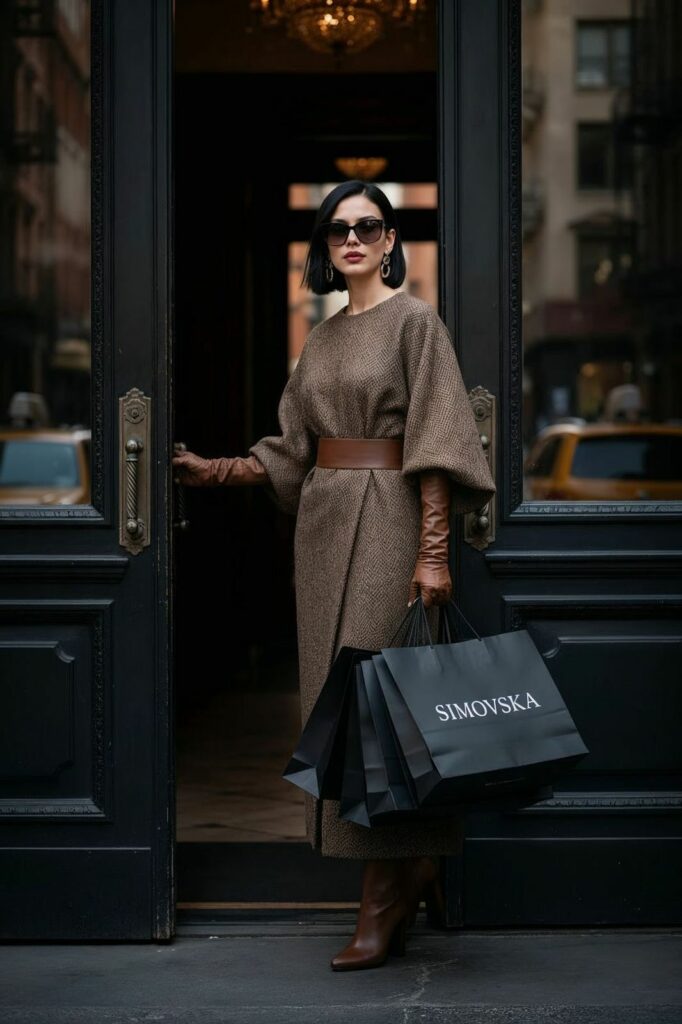
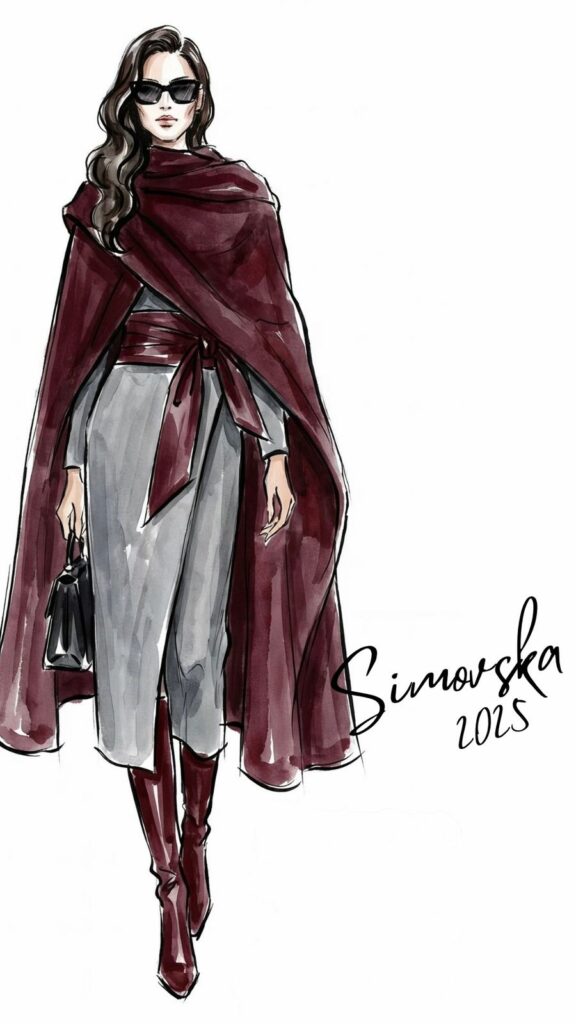
Do you have an example where AI resulted in a design that people would not have traditionally invented?
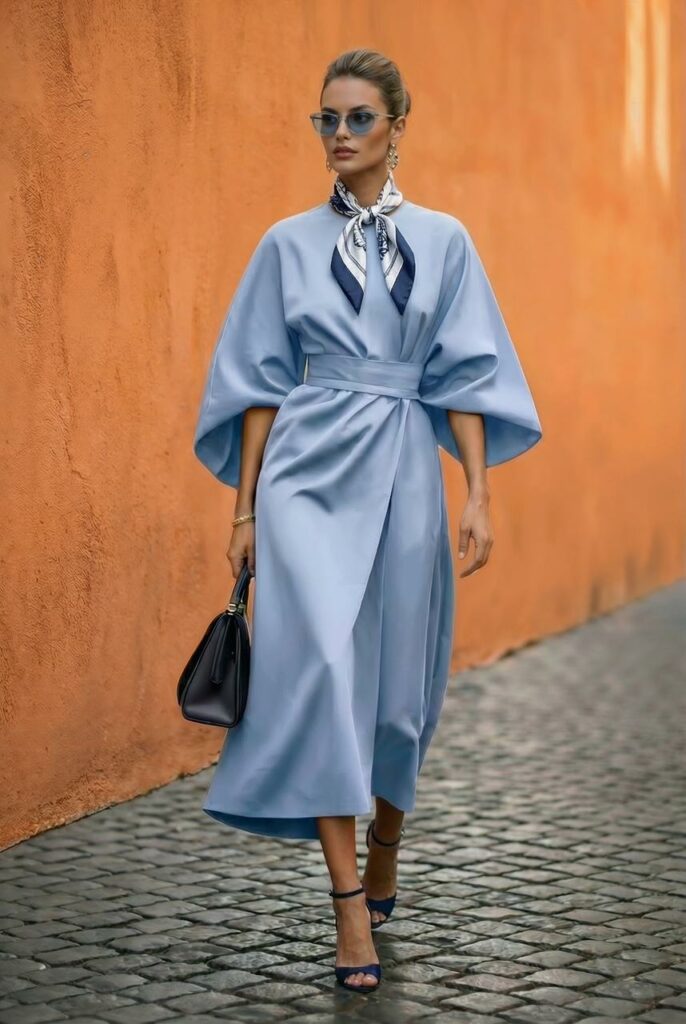
Yes — one of the best examples is the sleeve of our Madam Dress. The answer is definitely yes, and the best example is their well-known “Madam Dress.” Its distinctive, asymmetrical sleeve is the result of experimentation with artificial intelligence, which proposed a shape that feels at once chaotic and incredibly elegant.
This design became their best-selling model, and its originality was so striking that many other well-known fashion houses and global clothing manufacturers began copying and reinterpreting it. This is proof that when the machine suggests an idea and the human refines it with taste, the result can become a fashion phenomenon that sets global trends.
Could you show us, through one concrete example, what the process of designing, producing, and promoting/selling one of your models looks like?
Every model begins with the Simovska woman in mind. When we create a new design or collection, we first ask ourselves what she wants to wear this season. The questions are always very specific: how can she look powerful and striking without appearing masculine, and how can she look refined, elegant, and completely polished, while still being comfortable enough to handle a dynamic day.
We then select the fabrics and begin the creative process, combining our design vision with data, trend analysis, and AI-supported research. Many ideas are generated, then filtered and refined until the final collection is distilled. Once a particular model is selected, it moves into production, where we focus on creating exactly as much as is needed, with precision and as little waste as possible. The sales process is then fairly direct, because we have built a large and highly engaged audience that eagerly follows each new design and orders it online.
How do you manage to combine the tradition of three generations with the most advanced technology?
We do not see tradition and technology as opposites. The three generations before us built deep knowledge of fashion — in construction, proportions, fabrics, craftsmanship, and the intuition that comes only from years of creating real clothing for real women. Technology allows us to carry that knowledge forward, but in a new language. AI helps us analyze faster, imagine more, and move forward more quickly, but the foundation still remains the heritage, discipline, and design sensitivity that have been passed down through generations. In that sense, tradition gives us depth, and technology gives us reach.
What are the main advantages that Simovska AI offers its clients?
The main advantage we offer our clients is our deep understanding of the woman who wears our clothing. We understand how she lives, how she moves, and what her day demands from her. She is successful, creative, powerful, and busy with her own projects, so we create clothing that supports that kind of life rather than restricting it. We pay great attention to body proportions, movement, comfort, and structure, creating pieces that enhance the feminine silhouette while also allowing ease and confidence. Our goal is to offer clothing that looks elegant and feminine, yet also strong, striking, and fully aligned with the woman who wears it. At the same time, we do not isolate her from the wider world of fashion — she remains part of the current conversation, connected to contemporary trends and to the constantly evolving language of style. That is precisely why our designs resonate globally and appeal to women across all continents.
Does the AI tool allow clients to participate in the creative process?
Yes, in a way, they already do. On social media, we often play creative games with our audience, where they ask for ideas, details, or directions, and we create them in real time. This makes the process more open, dynamic, and interactive, and allows clients to feel involved in the development of the brand. At the moment, this kind of participation still mainly takes place on a creative and collaborative level, rather than being fully integrated into the purchasing process itself. But this is something we are actively developing through our R&D department, because we see great potential for the customer to become a more direct part of the design journey.
How does AI help you predict the desires or reactions of buyers, and in that way create an offer tailored to them?
AI works by learning from and processing thousands of images in order to create something new. In our case, those images are important because they reflect the current mood, visual sensibility, and emerging trends already circulating across social media and the broader fashion context. By analyzing these large visual datasets, AI can recognize patterns, desires, and aesthetic shifts much faster than the traditional process. It does not simply copy what already exists, but uses this visual information as a way to understand the moment and transform it into new design ideas that are timely, relevant, and connected to what audiences are responding to right now.
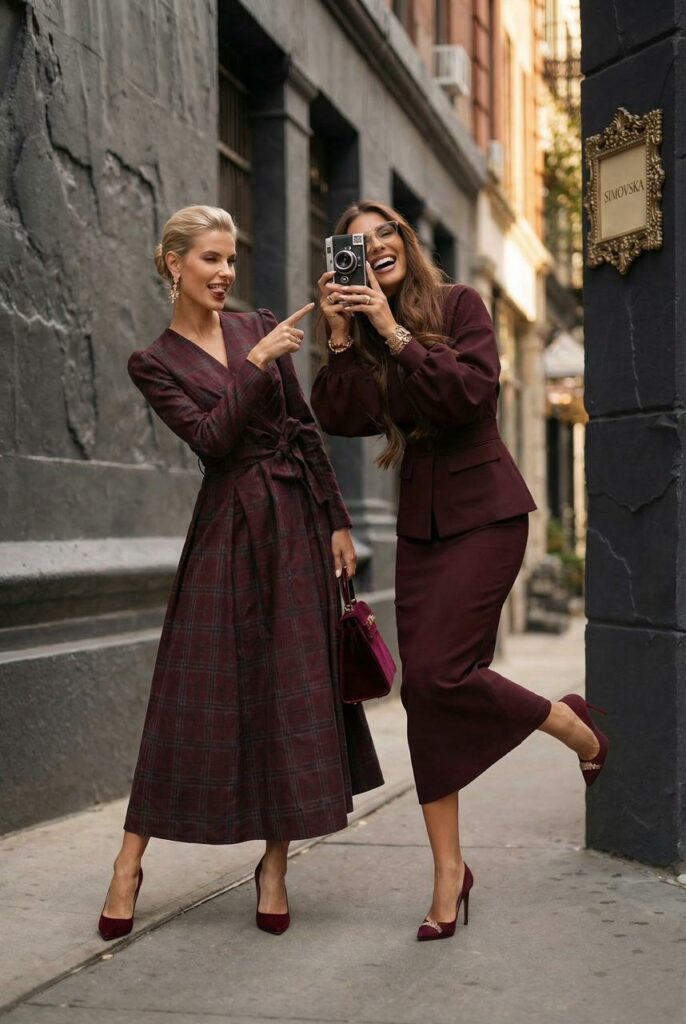
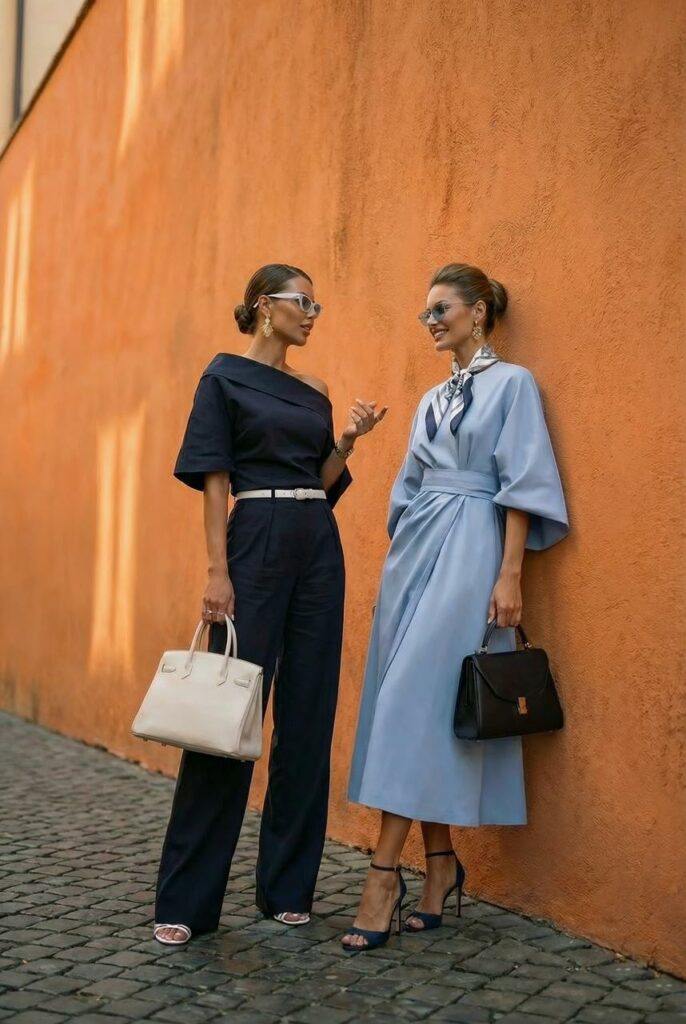
Who are Simovska AI’s clients and markets?
Our clients are women who are ambitious, creative, and independent, often at the strongest stage of their careers and actively building their own businesses, professions, and fulfilling lives. They come to Simovska because they want clothing that simultaneously expresses strength, femininity, elegance, and presence. In terms of markets, we are a global brand. Our designs resonate with women across all continents, and our audience continues to grow internationally through digital channels and online sales. What connects these markets is not geography, but a shared mindset: women who want to feel refined, powerful, and completely themselves.
How do you deal with the challenges of localization and adapting AI models for different markets?
We approach this by combining global analysis with local sensitivity. AI helps us read broad international trends, but human judgment is essential in understanding the cultural, aesthetic, and practical differences between markets. Women in different parts of the world may share the same desire to feel elegant, powerful, and feminine, but the way this is expressed can vary depending on lifestyle, climate, and local fashion codes. At the same time, there is also a universality within our designs. Many of our pieces are modest yet contemporary, which allows them to reach women in very different contexts. In that sense, both a woman in New York and a woman in the Middle East can recognize herself in the same design. We also keep both our summer and winter collections active for most of the year, so that we can respond more flexibly to the different climate needs of clients in the North and the South. Our role is to use AI as a tool for insight and speed, while carefully shaping the final design language so that it is both globally relevant and locally meaningful.
Does AI help reduce textile waste, or maximize the use of fabric?
Yes, AI helps us reduce textile waste in several ways. First, it allows us to understand demand more precisely, so that we can produce more accurately and avoid unnecessary overproduction. Second, it helps us make faster and better decisions in the design and development phase, which means fewer failed samples and less wasted material. More broadly, because AI makes the entire process more data-driven, we can create with greater intention rather than through trial and error. In that way, it supports a production model that is not only more efficient, but also more responsible in the way fabric and resources are used.
Can AI predict demand and optimize production in real time?
Yes, this is exactly one of the most important ways in which we use AI. Our collections are not developed according to the traditional fashion rhythm, where brands design and produce six or seven months in advance, often based on forecasts that no longer reflect what women actually want by the time the collection arrives. Instead, we work in a much more dynamic way: creation, sales, and production are in constant dialogue with one another.
AI helps us read demand in real time, so the collection can evolve in parallel with market response. Rather than producing large quantities far in advance, we create and produce simultaneously, with continuous feedback flowing between audience reaction, creative development, and production decisions. This allows us to move with much greater precision, adapt quickly, and focus on what is truly in demand. The result is a model that is more responsive, more efficient, and generates significantly less waste than the traditional system.
How do you see the role of AI in the future of the fashion industry — do you think creativity will remain predominantly human, or become mainly AI-assisted?
I believe that the future of fashion will be greatly AI-assisted, especially in the mainstream segment, but creativity itself will remain deeply human. What is emerging is not a competition between human imagination and artificial intelligence, but a fusion of the two. We are already witnessing this shift through the merging of the virtual and physical worlds, where people buy digital garments for their avatars and then seek similar forms of expression in real life as well. In the years ahead, AI will become so seamlessly integrated into the fashion experience — from creation, to communication, to sales — that it may no longer even feel like a separate technology, but simply part of the way fashion functions. And yet, what will remain essential is the human vision behind it all: taste, emotion, intuition, and meaning. Some of our deepest sensitivities, desires, and longings can still only truly be recognized, understood, and expressed by other human beings. AI may become a powerful creative partner, but the soul of fashion will continue to come from the human ability to feel.
What are the biggest challenges of being a married couple developing an AI solution in the fashion industry?
One of the biggest challenges is that, as a married couple, our personal and professional worlds are very closely intertwined. When you are building something as demanding as an AI-driven fashion business, there is rarely a clear boundary between work and private life, so balance is something that must be consciously protected. At the same time, that closeness is also one of our strengths, because it allows for a very deep level of trust, speed, and shared vision. Another challenge is that we are simultaneously working in two very demanding worlds — technology and fashion — both of which move quickly and require constant adaptation. But in many ways, the fact that we are a couple has helped us face those pressures with greater resilience, because we are not only building a business, but also a shared vision.
What new features or AI techniques are you planning to introduce in the next phase of development?
Our ambition for the next phase is to develop body-scanning technology together with an AI-based app that women will be able to use to dress more intelligently and more personally. The idea is for clients not only to understand which silhouettes, proportions, and cuts suit them best, but also to interact more directly with our designs — adapting or modifying certain elements according to their own preferences. In that way, the future of Simovska is not only in creating clothing for women, but also in creating tools that will allow women to shape fashion around themselves more actively, more precisely, and with greater confidence.
Are you considering opening the platform to a wider fashion audience or collaborating with other designers?
Not in that sense. Rather than opening the platform commercially to a wider fashion audience or using it as a space for collaboration with other designers, we are currently focused on developing two projects aimed at training and skills development for young designers and pattern makers. Our ambition is to help build a new generation of talent with AI and technological skills that are becoming increasingly important in fashion, but which traditional schools still do not truly offer. In the long term, we hope to create a network of young people equipped with these new competencies, so that they can actively help shape the future of the industry.
Do you plan to offer tools or APIs for other brands or developers?
Our focus is not on turning Simovska into a generic tool for other brands or developers, but on continuing to build and refine our own ecosystem, language, and innovation from within. For us, AI is not simply a technical service to be exported, but an integral part of our brand identity, our creative process, and the way we understand women, fashion, and production. At this stage, our priority is to deepen that unique model rather than externalize it.



































































































































1 comment
WELCOME TO SOFIA!